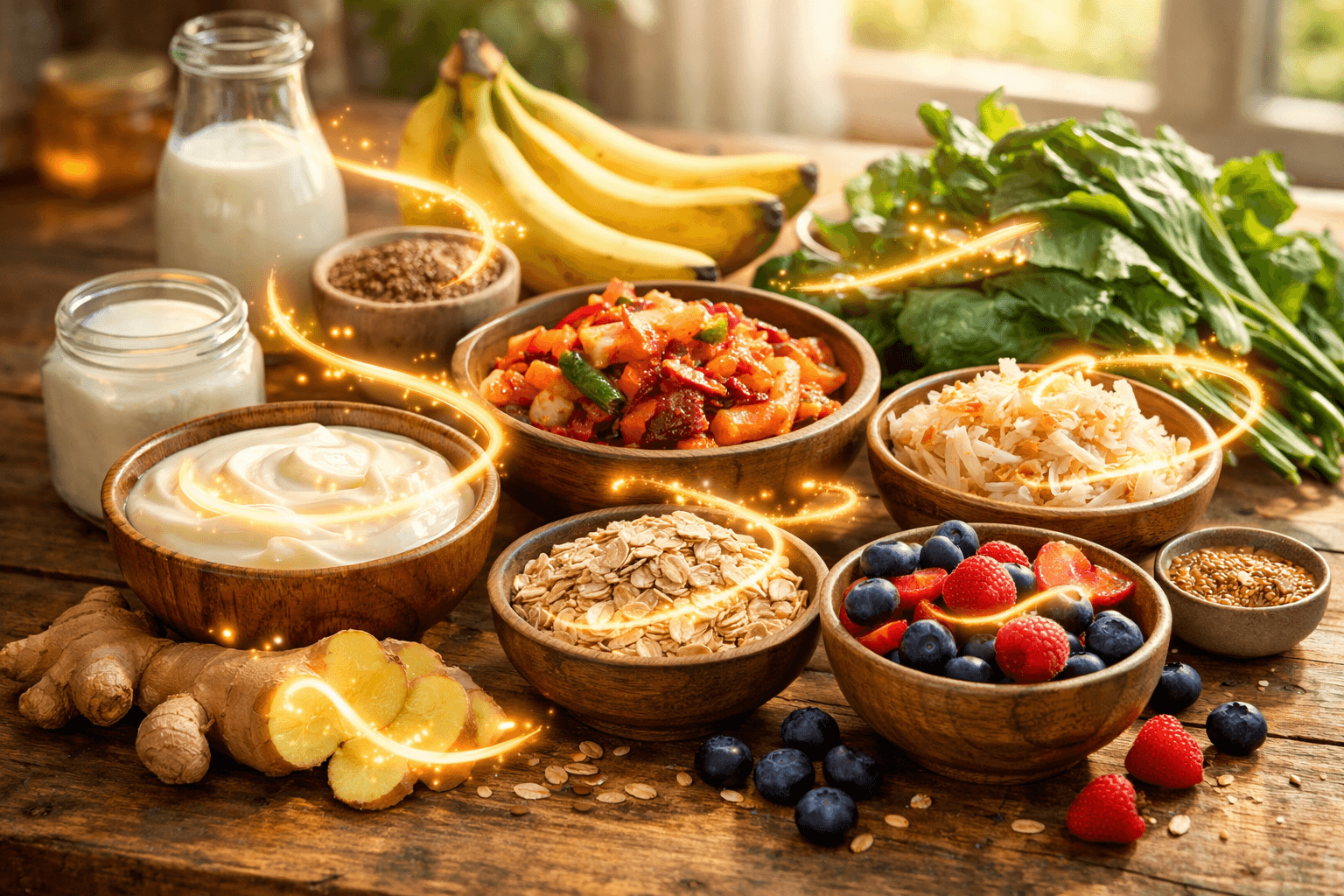
Your gut health impacts far more than just digestion - it affects your immune system, mood, energy levels, and overall well-being. The foods you eat play a crucial role in maintaining a healthy gut microbiome.
Understanding Your Gut
Your gut is home to trillions of bacteria, both beneficial and harmful. The goal is to maintain a balance that favors the good bacteria. These beneficial bacteria help with: - Digestion and nutrient absorption - Immune function - Production of certain vitamins - Regulation of inflammation - Mental health (via the gut-brain axis)
Probiotic Foods
Probiotics are live beneficial bacteria that you can consume directly:
Yogurt (especially Greek yogurt) contains live cultures that support gut health. Look for products with "live and active cultures" on the label.
Kefir is a fermented milk drink that's even richer in probiotics than yogurt. It's also a good source of protein and calcium.
Sauerkraut is fermented cabbage that provides probiotics along with fiber and vitamins C and K. Choose unpasteurized versions for maximum benefit.
Kimchi is a Korean fermented vegetable dish, typically made with cabbage and radishes. It's spicy, flavorful, and packed with probiotics.
Kombucha is a fermented tea drink that contains probiotics and beneficial acids. However, watch the sugar content in commercial varieties.
Miso is a fermented soybean paste used in Japanese cooking. It's rich in probiotics and adds umami flavor to dishes.
Tempeh is fermented soybeans that provide both probiotics and complete protein.
Prebiotic Foods
Prebiotics are types of fiber that feed the beneficial bacteria in your gut:
Garlic contains inulin, a type of prebiotic fiber that feeds good bacteria.
Onions are rich in prebiotic fibers, particularly fructooligosaccharides (FOS).
Asparagus contains inulin and other prebiotic fibers that support gut health.
Bananas (especially slightly underripe ones) are rich in resistant starch, which acts as a prebiotic.
Oats contain beta-glucan, a type of fiber that supports beneficial gut bacteria.
Apples are rich in pectin, a prebiotic fiber that supports gut health.
Chicory Root is one of the richest sources of inulin and is often used as a coffee substitute.
Other Gut-Supporting Foods
Fiber-Rich Foods: Whole grains, legumes, fruits, and vegetables provide the fiber your gut bacteria need to thrive.
Bone Broth: Contains collagen and amino acids that support gut lining health.
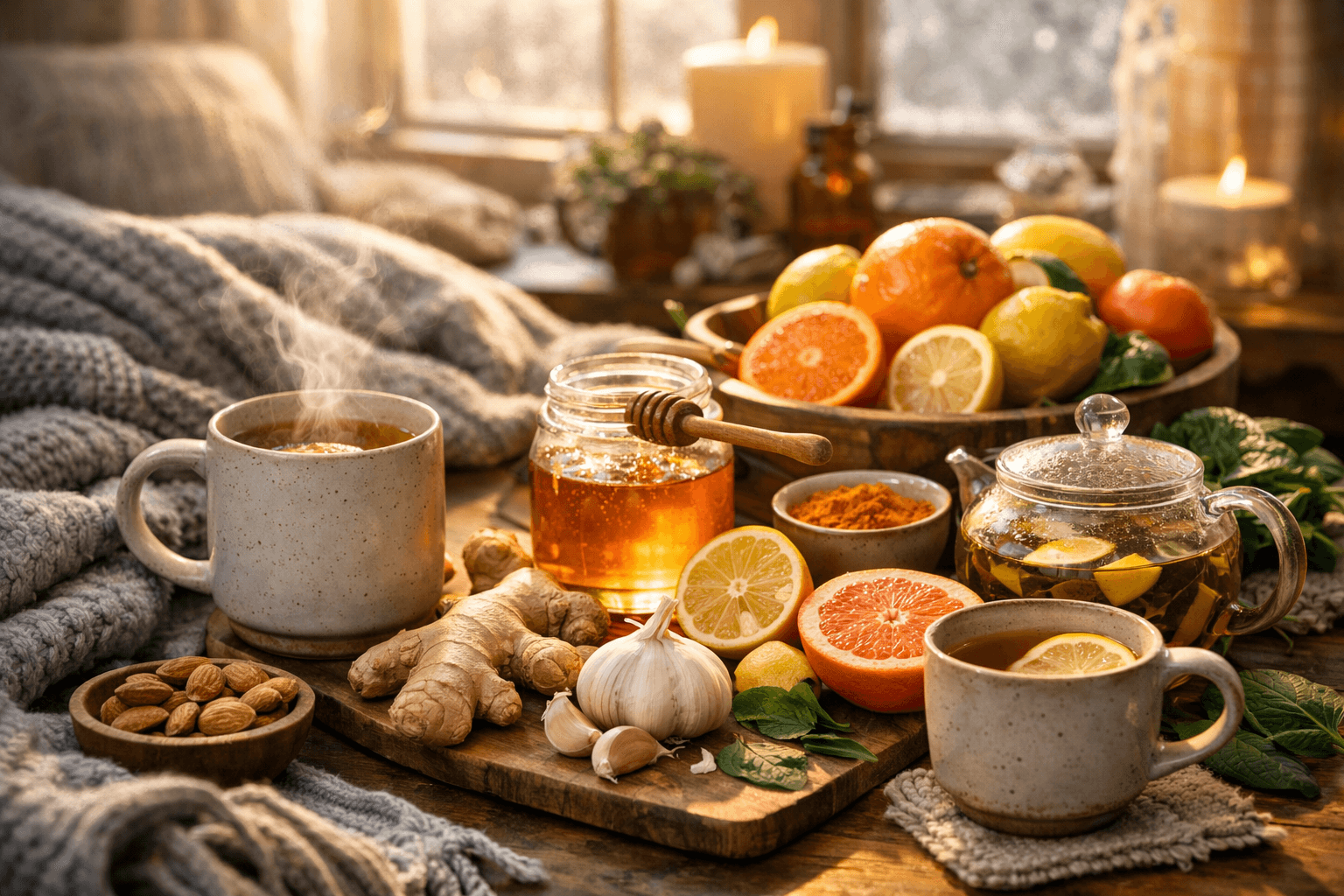
Ginger: Has anti-inflammatory properties and can help with digestion and nausea.
Turmeric: Contains curcumin, which has anti-inflammatory effects that may benefit gut health.
Fermented Foods: Beyond the probiotic foods listed above, try fermented pickles, natto, and other traditional fermented foods.
Foods to Limit
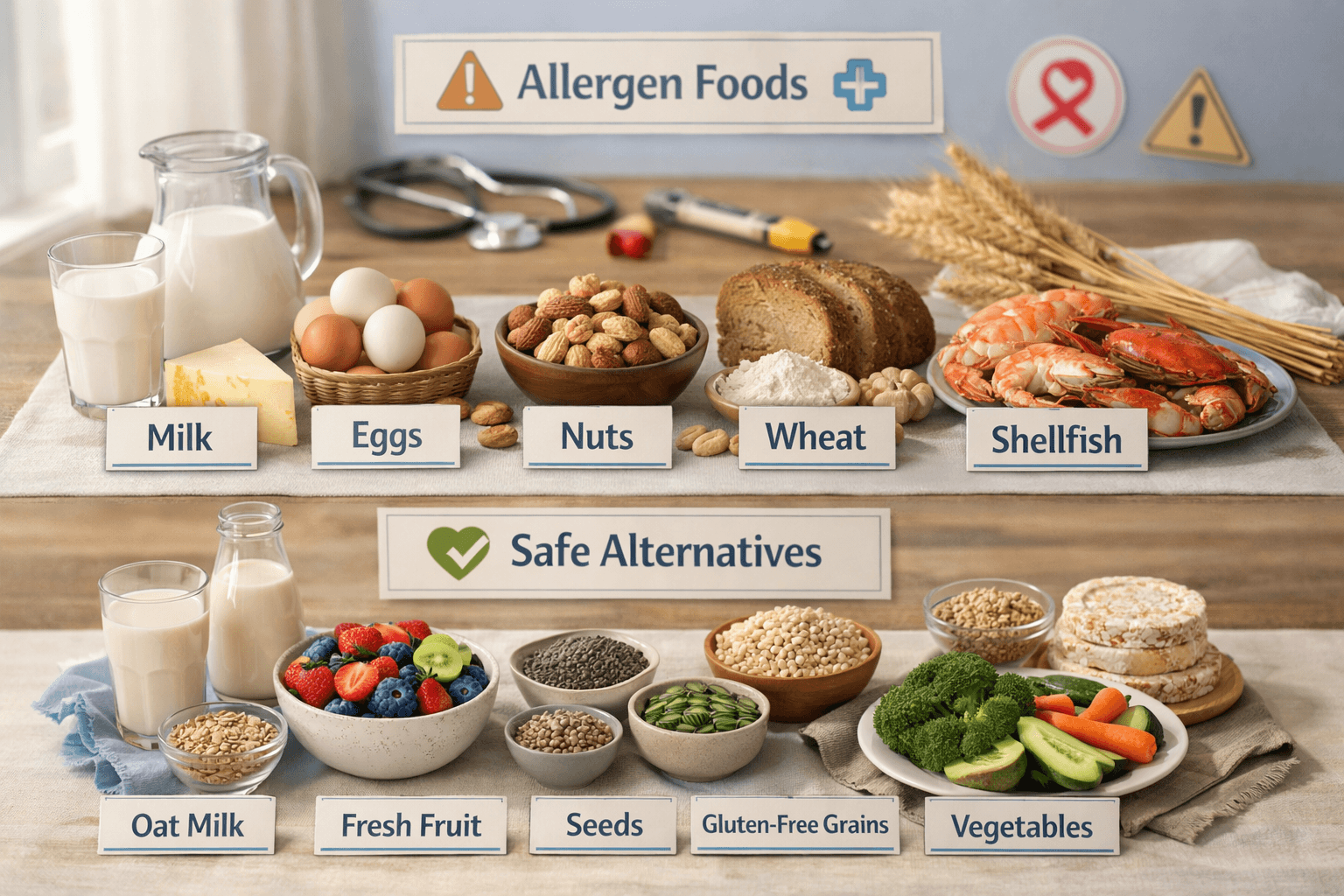
Some foods can negatively impact gut health: - Highly processed foods - Excessive sugar - Artificial sweeteners (in some people) - Excessive alcohol - Foods you're intolerant to
Building a Gut-Healthy Diet
Aim for variety: - Include probiotic foods daily - Eat plenty of prebiotic foods - Focus on whole, minimally processed foods - Stay hydrated - Manage stress (it affects gut health too)
Practical Tips
Start slowly when adding fermented foods - your gut needs time to adjust. Include a variety of fiber sources to feed different types of beneficial bacteria. Consider keeping a food diary to identify which foods make you feel best.
The Bottom Line
A healthy gut is built over time through consistent, varied nutrition. Focus on including probiotic and prebiotic foods regularly, limit processed foods, and listen to your body. Your gut will thank you with better digestion, improved energy, and enhanced overall health.