Intermittent fasting has become one of the most popular dietary approaches, backed by growing scientific research. But what exactly is it, and is it right for you?
What Is Intermittent Fasting?
Intermittent fasting (IF) is an eating pattern that cycles between periods of eating and fasting. It doesn't specify which foods you should eat, but rather when you should eat them. This is different from traditional diets that focus on what to eat.
How It Works
When you fast, several things happen in your body: - Insulin levels drop significantly, facilitating fat burning - Human growth hormone levels increase, supporting fat loss and muscle gain - Cellular repair processes are initiated - Gene expression changes, benefiting longevity and disease protection
Popular Methods
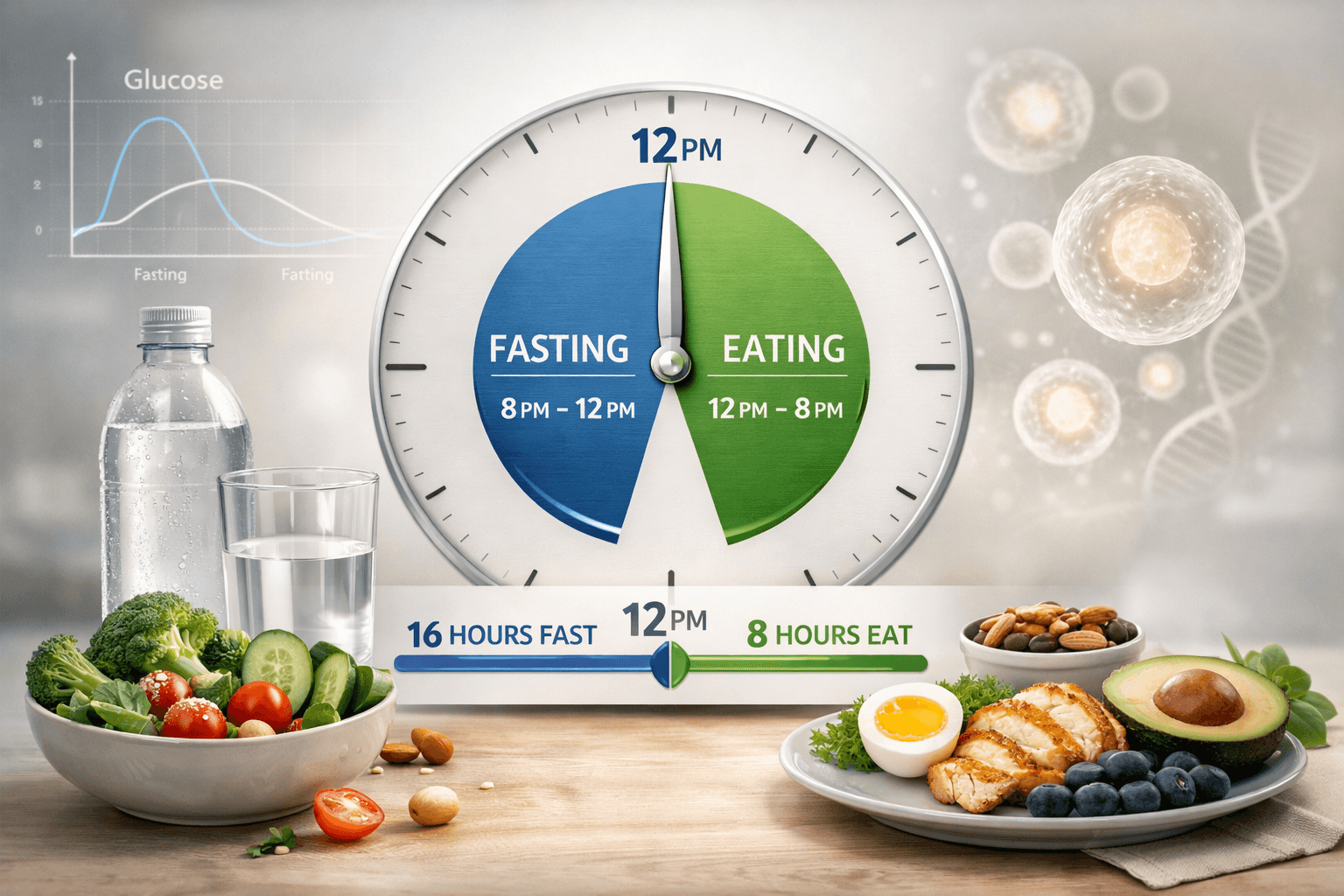
16/8 Method: Fast for 16 hours and eat within an 8-hour window. For example, eat between 12 pm and 8 pm, then fast until noon the next day.
5:2 Diet: Eat normally for 5 days of the week, then restrict calories to 500-600 on 2 non-consecutive days.
Eat-Stop-Eat: Fast for 24 hours once or twice per week.
Alternate-Day Fasting: Fast every other day, either completely or with a small meal (500 calories).
Health Benefits
Research suggests intermittent fasting may: - Support weight loss and fat loss - Improve insulin sensitivity - Reduce inflammation - Support brain health and cognitive function - Promote cellular repair and autophagy - Potentially extend lifespan
Who Should Be Cautious
Intermittent fasting isn't for everyone. Be cautious if you: - Are pregnant or breastfeeding - Have a history of eating disorders - Have diabetes (consult your doctor first) - Are under 18 - Take medications that require food
Getting Started
If you're new to intermittent fasting, start gradually: 1. Begin with the 12/12 method (12-hour eating window) 2. Gradually extend your fasting window 3. Stay hydrated during fasting periods 4. Break your fast with nutrient-dense foods 5. Listen to your body and adjust as needed
What to Eat
During your eating window, focus on: - Whole, nutrient-dense foods - Adequate protein - Healthy fats - Complex carbohydrates - Plenty of vegetables
Common Challenges
Hunger: It's normal to feel hungry initially. This usually subsides as your body adapts. Stay hydrated and keep busy.
Low Energy: Some people experience low energy initially. This typically improves as your body becomes fat-adapted.
Social Situations: Plan ahead for social events. You can adjust your eating window or take a break from fasting when needed.
The Bottom Line
Intermittent fasting can be an effective tool for health and weight management, but it's not a magic solution. The most important factor is finding an eating pattern that works for your lifestyle and that you can maintain long-term. Always consult with a healthcare provider before making significant changes to your eating patterns.