Nutrition labels can be overwhelming, but understanding them is one of the most important skills for making healthy food choices. Let's break down how to read and interpret these labels effectively.
The Basics
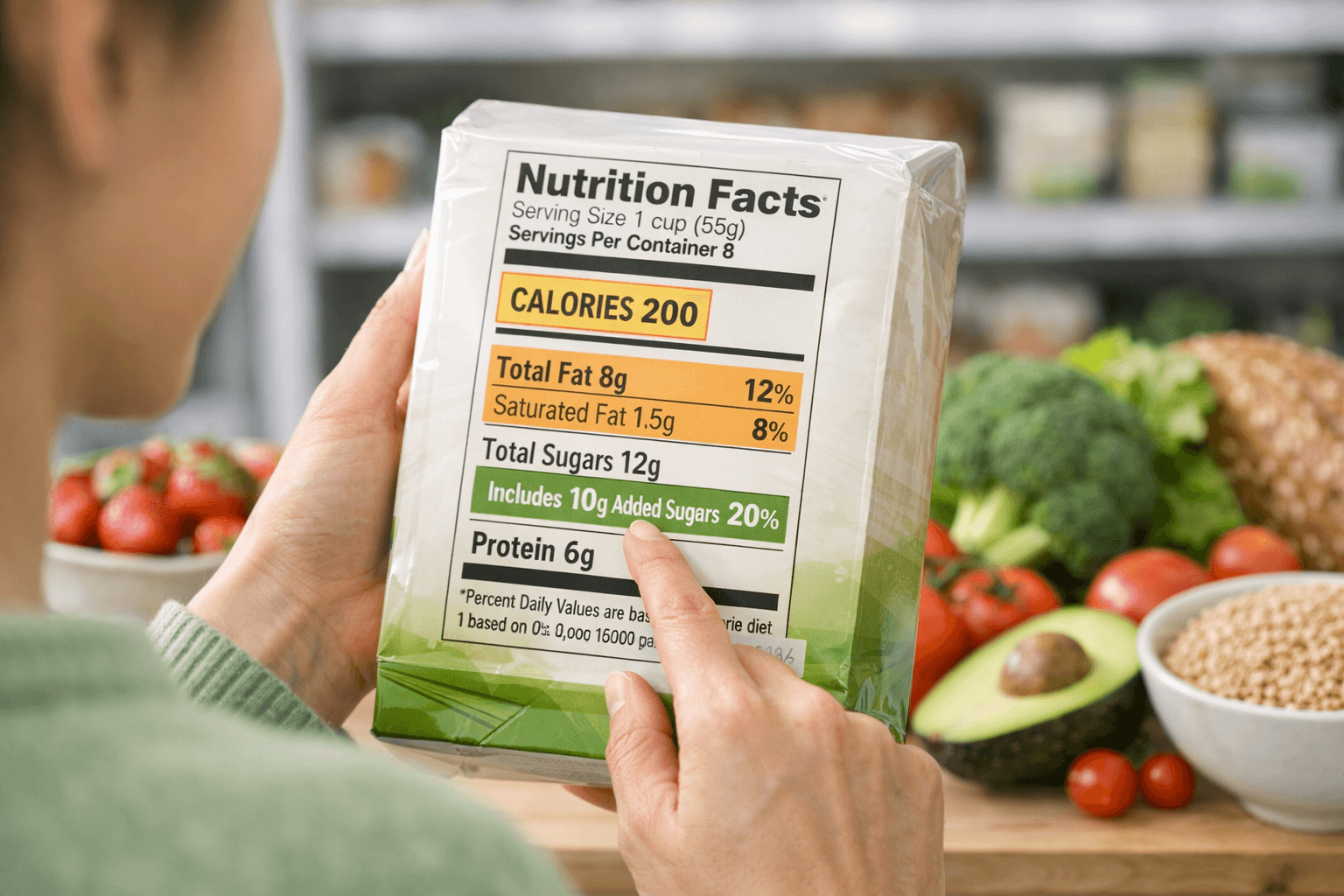
Every nutrition label contains several key sections: - Serving size and servings per container - Calories - Macronutrients (fat, carbohydrates, protein) - Micronutrients (vitamins and minerals) - Ingredients list
Start with Serving Size
The serving size is crucial because all the information on the label is based on this amount. Many packages contain multiple servings, so if you eat the whole package, you need to multiply all the values accordingly.
Understanding Calories
Calories tell you how much energy you'll get from a serving. For weight management: - 40 calories is low - 100 calories is moderate - 400+ calories is high
Remember, calories alone don't tell the whole story. The quality of those calories matters more than the quantity.
Fats: The Good, The Bad, and The Ugly
Not all fats are created equal: - Saturated fats should be limited (aim for less than 20g per day) - Trans fats should be avoided completely (look for "0g" or check ingredients for "partially hydrogenated oils") - Unsaturated fats (mono and poly) are beneficial for heart health
Carbohydrates and Fiber
Total carbohydrates include: - Dietary fiber (aim for 25-30g per day) - Sugars (both natural and added) - Other carbohydrates
Focus on foods high in fiber and low in added sugars. Look for "Added Sugars" on the label - the American Heart Association recommends no more than 25g per day for women and 36g for men.
Protein
Protein is essential for muscle maintenance, satiety, and overall health. Most adults need 0.8g per kilogram of body weight, but active individuals may need more.
Sodium
Most people consume too much sodium. The recommended daily limit is 2,300mg, but ideally aim for less than 1,500mg. Processed foods are often high in sodium, so check labels carefully.
Vitamins and Minerals
The label shows percentages of Daily Value (DV) for certain vitamins and minerals. A food providing 20% or more of the DV is considered high in that nutrient.
The Ingredients List
Ingredients are listed in descending order by weight. The first few ingredients make up the majority of the product. Look for: - Whole foods at the top of the list - Minimal processing - Ingredients you recognize and can pronounce
Red Flags to Watch For
- High amounts of added sugars (especially in unexpected places) - Trans fats or partially hydrogenated oils - Long lists of unrecognizable ingredients - High sodium content - Artificial colors and preservatives
Percent Daily Value
The %DV helps you understand if a serving is high or low in a nutrient: - 5% or less is low - 20% or more is high
Use this as a guide, but remember these percentages are based on a 2,000-calorie diet. Your needs may differ.
Practical Tips
1. Compare products: Use labels to compare similar products and choose the healthier option 2. Check the ingredients first: If the ingredients list is full of chemicals, put it back 3. Don't be fooled by marketing: "Natural" and "organic" don't always mean healthy 4. Focus on whole foods: The best foods don't have labels (fresh fruits, vegetables, whole grains) 5. Use apps: Many apps can help you understand and track nutrition information
Common Label Tricks
- "Low-fat" products often have added sugar - "Sugar-free" may contain artificial sweeteners - "Whole grain" claims can be misleading - check the ingredients - Serving sizes may be unrealistically small
The Bottom Line
Reading nutrition labels is a skill that improves with practice. Start by focusing on a few key areas: serving size, added sugars, sodium, and the ingredients list. Over time, you'll become more comfortable interpreting the information and making healthier choices.